


Eötvös Loránd University held a two-day Krasznahorkai celebration as part of the Krasznahorkai Year. On Friday, ELTE awarded an honorary doctorate to its former student, László Krasznahorkai, in the frameworks of a formal ceremony. On Thursday, from the opening of the renovated Trefort Garden and the community spaces of the Faculty of Humanities' campus, through readings and the inauguration of the Krasznahorkai Reading Area, to a personal conversation with the writer, programs followed one another; the festivities ended with a special audiovisual performance.
The programs took place on September 17 as part of the series titled Connections and Common Spaces – Krasznahorkai Celebration in the Renewed Trefort Garden. The day was connected both to ELTE's Krasznahorkai Year of 2026 and to the introduction of the renovated campus.
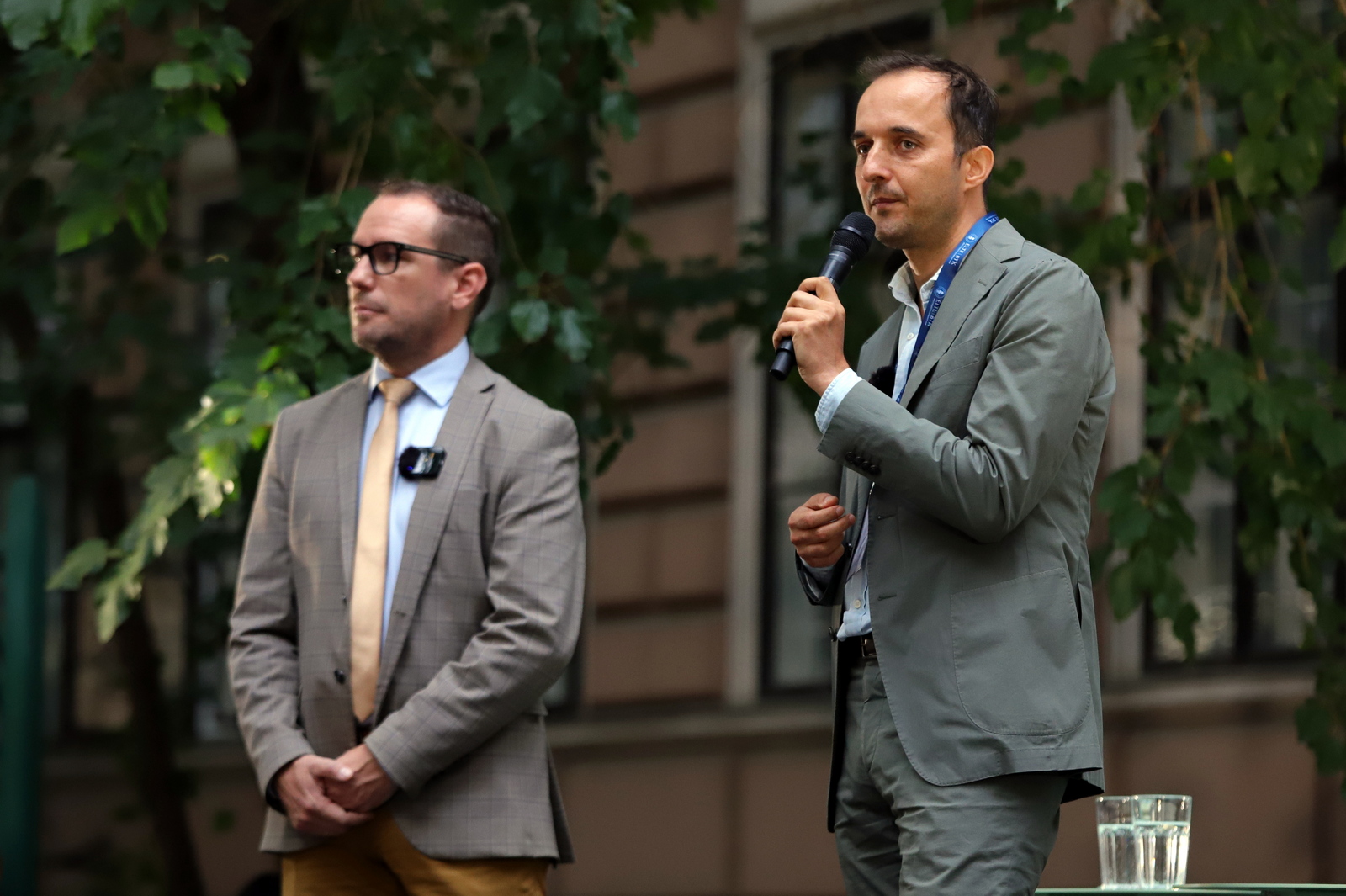
The event began in the afternoon in the Trefort Garden, where Dávid Bartus, Dean of ELTE's Faculty of Humanities, and Samu Szemerey, State Secretary of the Ministry of Transport and Investments, greeted attendees. The dean and the state secretary, who also participated as an architect in the renovation, highlighted their joy in returning a significant part of the historical Trefort Garden to the community, which students immediately claimed as their own.
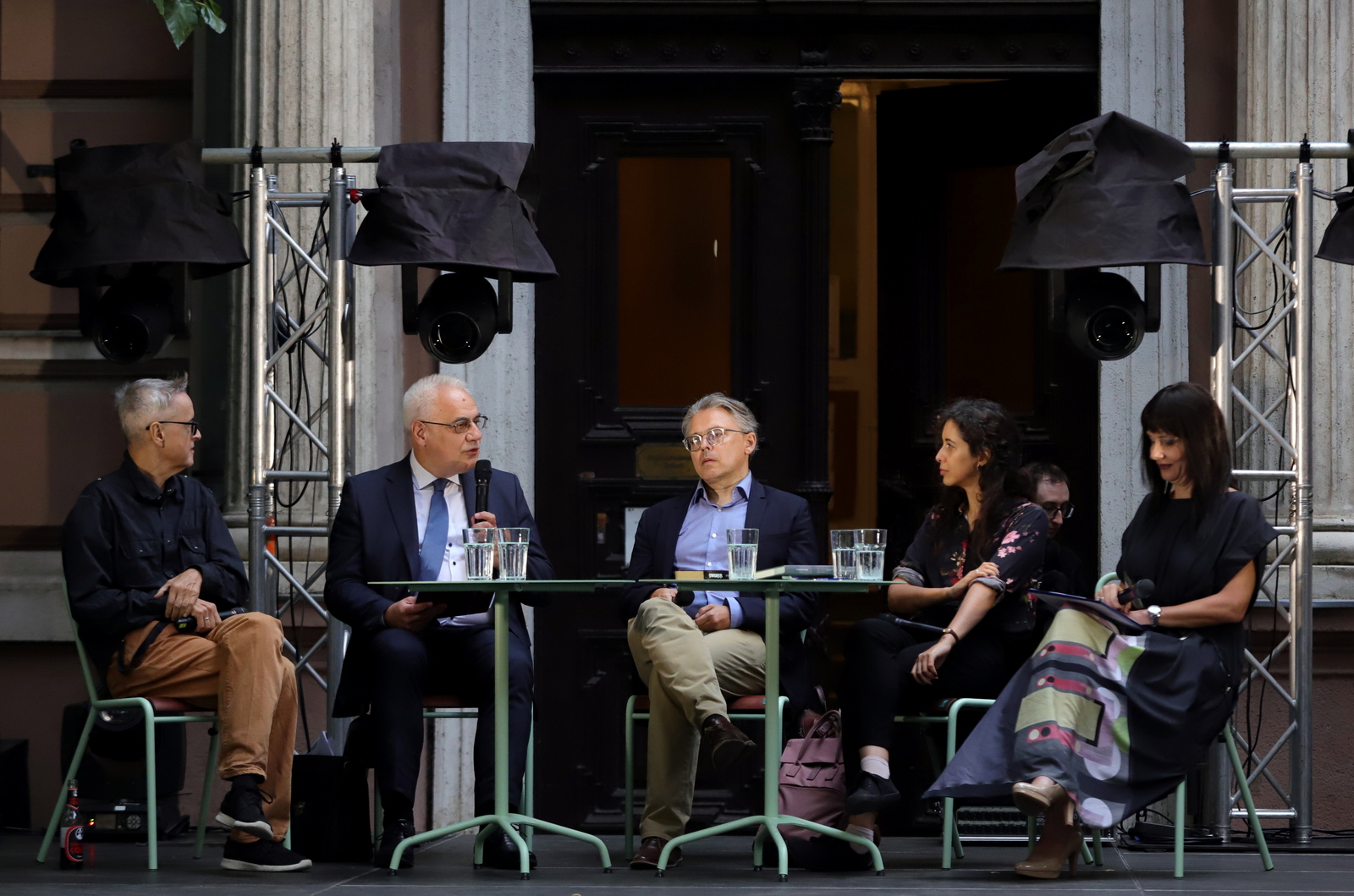
The opening ceremony was followed by a special conversation moderated by Orsolya Karafiáth. László Garaczi, Lili Hanna Seres, and György Dragomán—all former ELTE students—read excerpts from works by László Krasznahorkai. Lénárd Darázs, the rector of ELTE, also joined the readers. “You don't just read Krasznahorkai, you physically experience him,” quoted Karafiáth from an earlier review, and so it was intriguing for each reader to justify their excerpt choice. Lénárd Darázs selected the short story Borbélykézben (In the Barber's Hands, no official translation exists at the moment). The rector emphasized that, in his opinion, Krasznahorkai is one of world literature’s writers with exceptional sensitivity toward legally interpretable human relationships and moral questions. This connection is powerfully presented in the chosen work.
Following the event, during the reading performance Sound Shower – Sátántangó in Many Languages, ELTE teachers, students, and invited guests brought the opening pages of Sátántangó (Satan's Tango, officially translated as Satantango) to life in 30 different languages, showcasing the linguistic diversity of the Faculty of Humanities. The program simultaneously celebrated László Krasznahorkai’s work and those translators who convey his oeuvre to readers in various languages around the world.
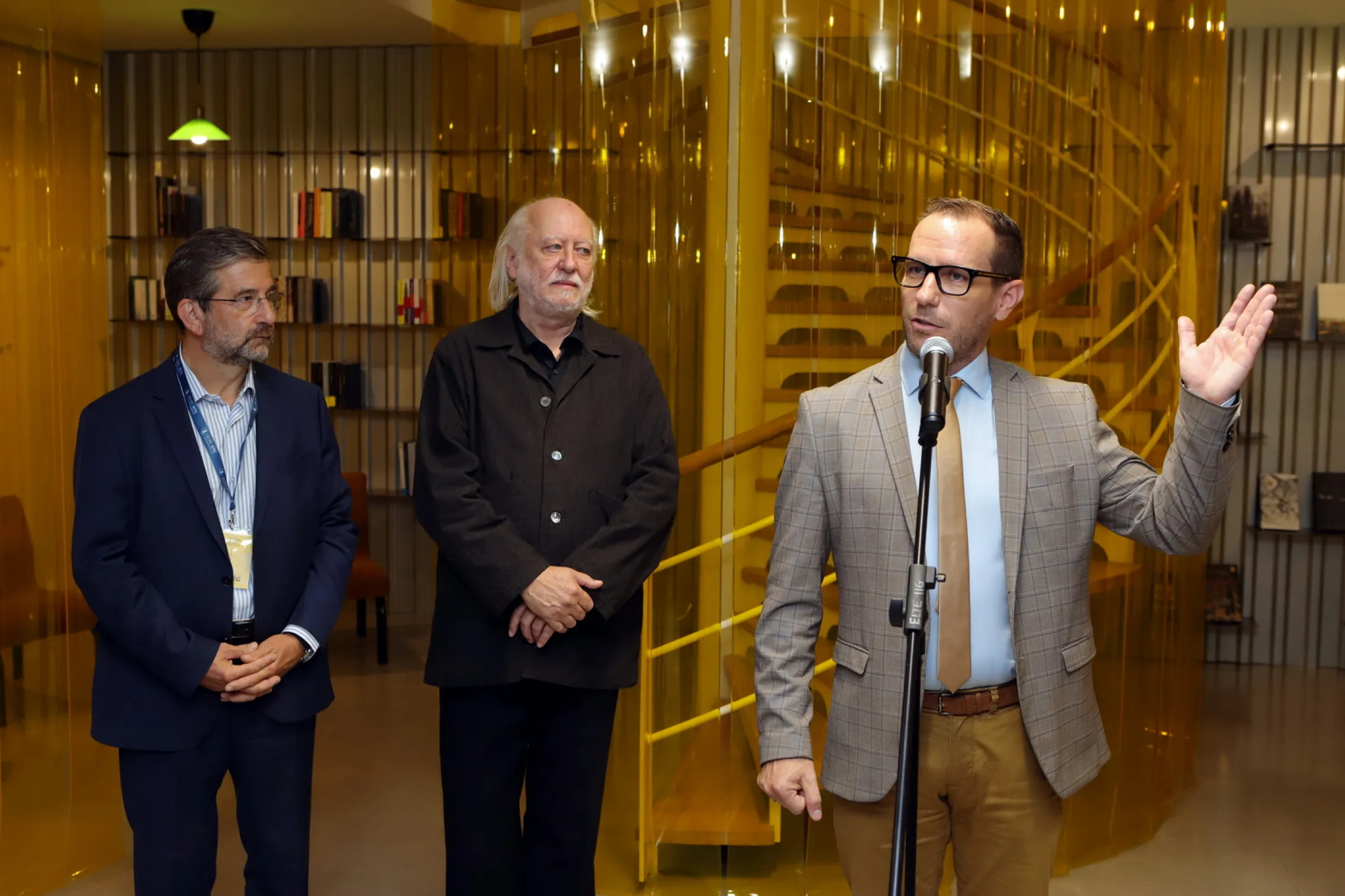
A key moment of the day was the inauguration of the Krasznahorkai Reading Area in the Central Reading Room of the Faculty of Humanities. It was a beautiful parallel: while the morning saw the university celebrate the 150-year-old University Library and Archives’ Library Palace, the afternoon witnessed the opening of a modern reading space. The dean emphasised that, through the inauguration and new function of this space, today’s students’ attention is drawn to the essential role of the university library. In the special space, shaped by unique materials and atmosphere, one can find the writer’s 109 volumes, both Hungarian editions and translations into other languages, thus opening the opportunity for many international students to read Krasznahorkai in their own language at ELTE.
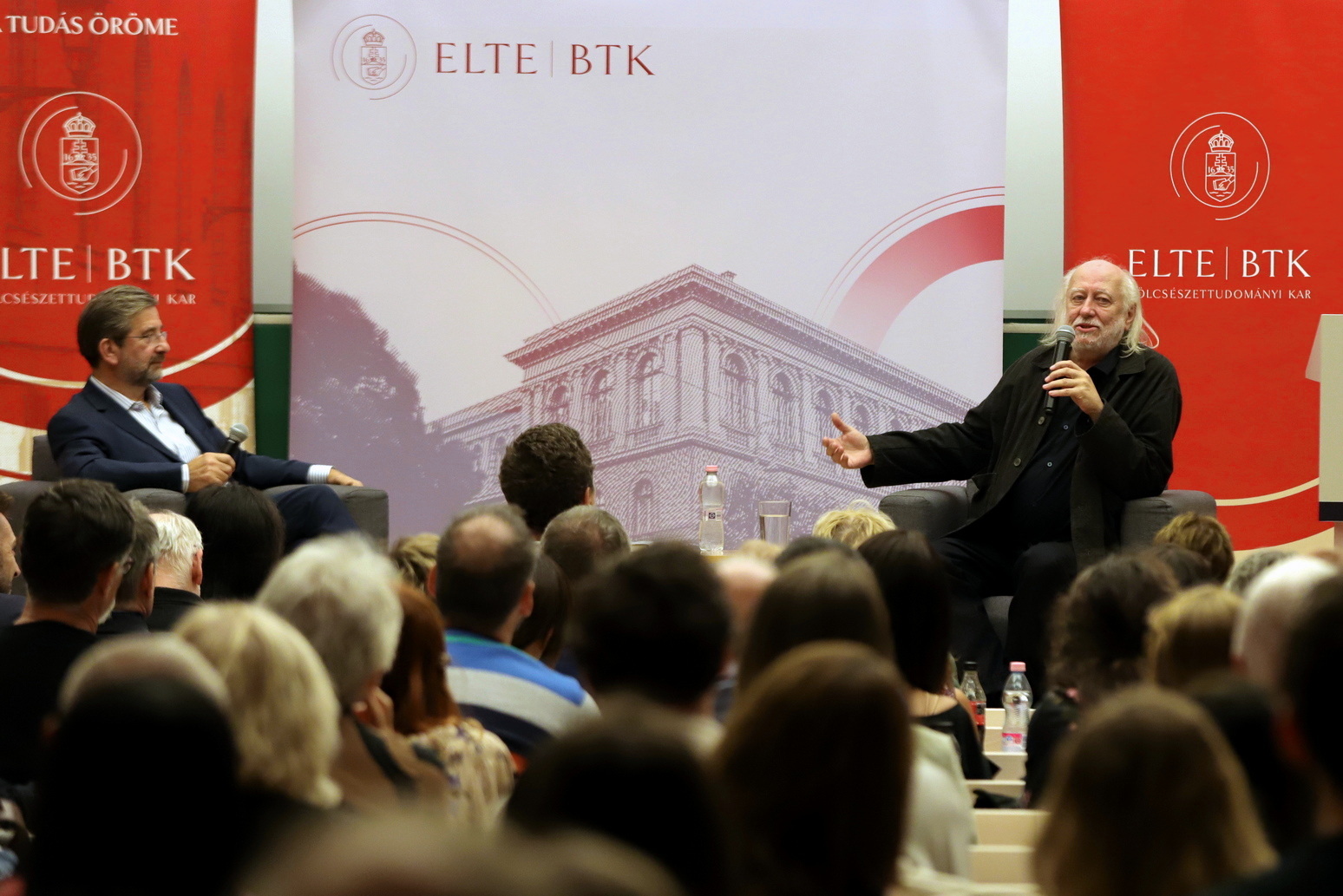
One of the most anticipated events of the afternoon was the conversation with the writer in the Maria Theresa Hall of Gólyavár. Tibor Gintli, literary historian and director of the Institute of Hungarian Literature and Cultural Studies ELTE’s, talked with László Krasznahorkai. The conversation touched on personal stories from the university years, the writer’s key ELTE mentors, moments from the Nobel Prize award, notable predecessors, and several important milestones in the writer’s oeuvre. The program, held before a full house and in a lively atmosphere, was made truly memorable by the interesting anecdotes and encounters, personal memories, and unexpected twists.
In the evening, a special experimental audiovisual performance titled What Hope – Immersions into the World of László Krasznahorkai followed. The Subaquatica project’s creators from MOME, together with humanities scholars from literature, film, and philosophy, conjured up the unique universe of Krasznahorkai’s oeuvre. The performance, organized around motifs of wandering, fear, and hope and presented before a full house, layered literature, musical, and visual experience in special ways. The day was closed with musical programs from the campus opening festival organized by the Student Union of ELTE's Faculty of Humanities.
The day celebrated the Nobel laureate, former ELTE student László Krasznahorkai’s oeuvre, his connection to the university, and the community that gathered around him in his honor.
After Thursday’s programs, September 18 focused on festive recognition: the University Senate awarded the honorary title Doctor Honoris Causa to former ELTE student László Krasznahorkai in a ceremonial assembly.
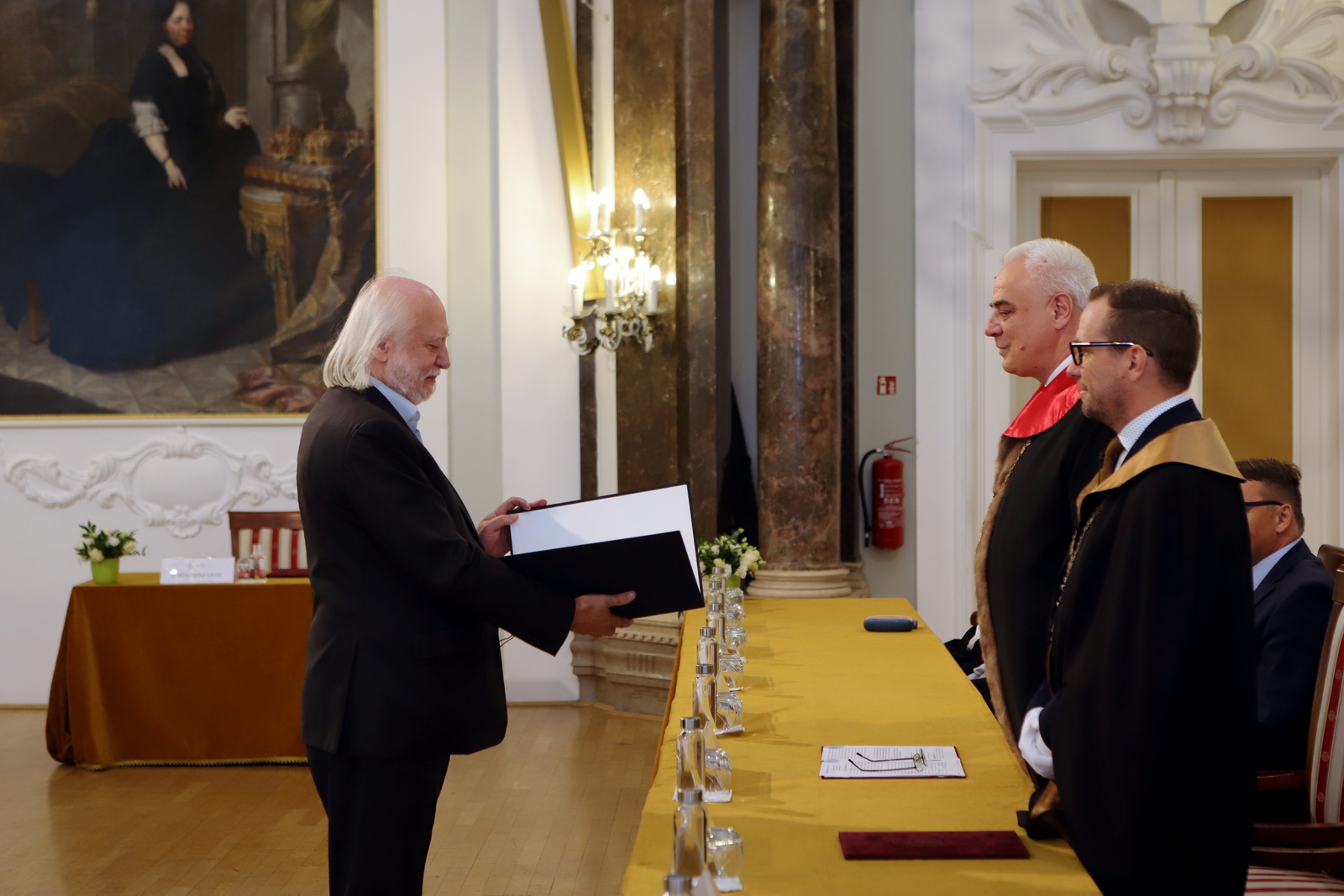
The honorary doctorate ceremony began with a speech by Rector Lénárd Darázs, who, following tradition, nominated László Krasznahorkai for the title “Doctor of Literary Sciences” in both Hungarian and Latin. He explained that the writer “may rightfully claim our university’s highest distinction for his work enriching universal culture with lasting values and internationally outstanding achievements.” Next, Dean Dávid Bartus delivered the laudation for the honorary doctorate candidate. He briefly recounted Krasznahorkai’s literary career and the philosophy present in his works, whose defining tone is deep sadness over inevitable decay and destruction. He said that, in this oeuvre, ethics and aesthetics are closely intertwined, as the almost cult-like reverence for beauty is in truth a moral stance against the ever-spreading mediocrity. He concluded the eulogy by emphasizing that Krasznahorkai’s works unite moral sensitivity, a philosophically profound interpretation of human existence, and exceptional aesthetic power in such a way that makes his literary output highly influential and of epochal importance.
After the laudatory speech, the rector and all members of the senate welcomed László Krasznahorkai as ELTE’s honorary doctor with a handshake.
“Above all, I would like to thank you for nominating me for and awarding me the Doctor Honoris Causa distinction. I’m grateful for the momentum of your hands, for their hesitation, and for the angles between your outstretched fingers. When at the Faculty Council you folded and dropped your ballot into the palms of those collecting them, and later, when you pressed the encouraging button at the moment of the senate’s final decision,” began László Krasznahorkai, who added that he remembers with gratitude and affection such wonderful ELTE mentors as Zsigmond Ritoók, Klára Korompay, György Poszler, László Vekerdi, Jenő Király, István Margócsy, and László Beke. “Without them and without all of you whom I’ve named here, I wouldn't have become a high school teacher and cultural educator.” He then continued his speech by recalling his personal intellectual journey.
After the writer’s address, they concluded the celebration with singing ELTE’s traditional Nagyszombat anthem and then listening to the European Anthem.
Sajtóvisszhang